
Sleep, meal timing and your Gut: How Circadian Rhythm shapes the Microbiome
WARNING : this is very new science
And when you shift the rhythm, everything downstream gets louder.
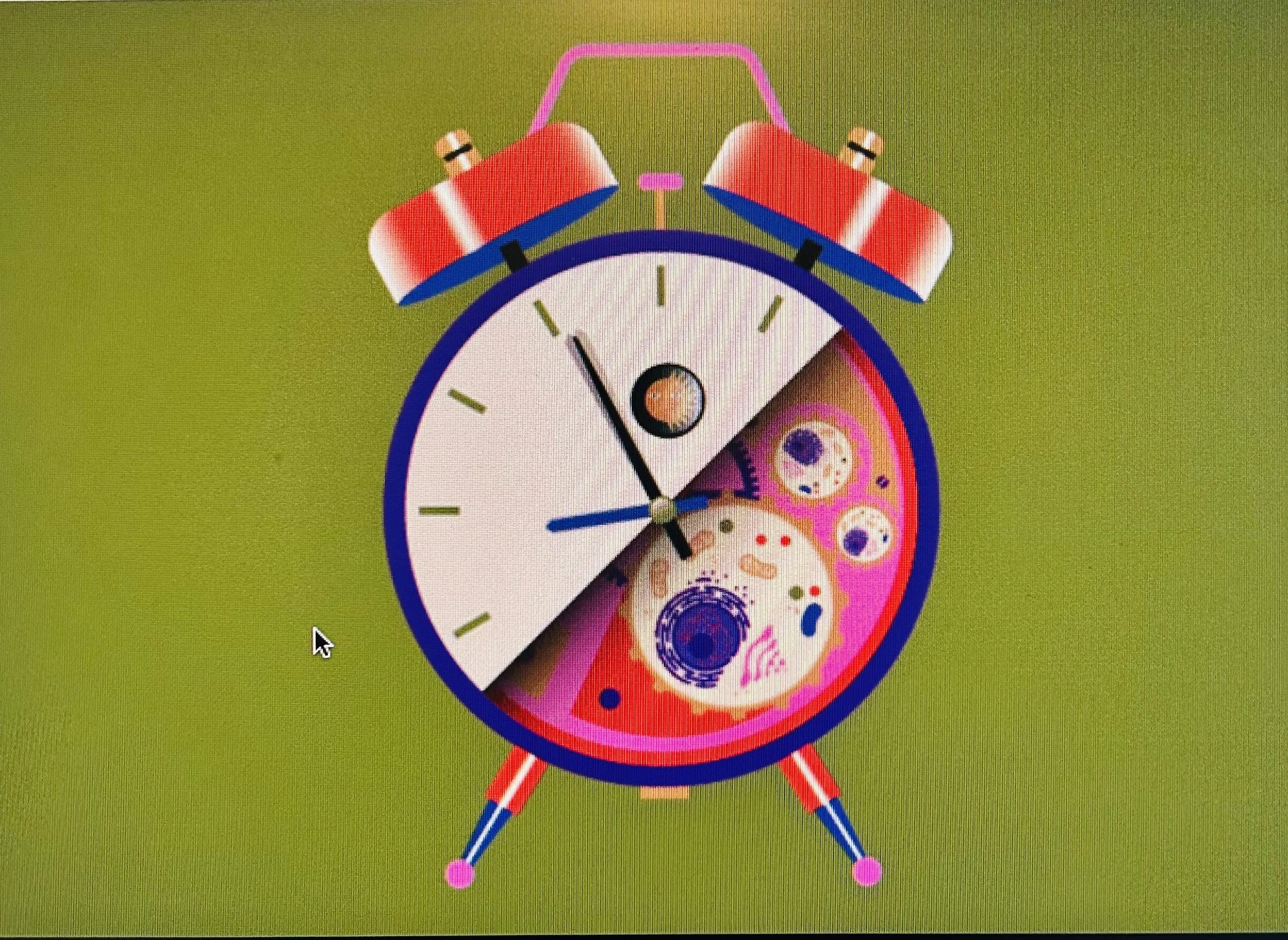
I am on a mission to educate and empower you. This content does not replace consultation or a patient client relationship or recommendation.
This content is most relevant for you if you are a
Shift worker
Night Owl and love late night TV or gaming
Social jet lag dominant
Eat large meals at night
Travel across time zones
Interpreting a significant cohort of microbiome tests and a preferred practitioner to Microba, Australia’s pre eminent microbiome lab, I notice some very common threads.
Scientific investigation of the gut–host connection reveals significant associations between the composition of your Gut microbiome, your Circadian Cycle and your overall health.

Circadian rhythms are 24-hour biological cycles that regulate nearly every process in your body, including your hormone secretion, immune function, metabolism, and sleep–wake patterns.
While the brain contains the master Circadian clock (the suprachiasmatic nucleus) clocks exist throughout the body — including in your gastrointestinal tract.
Importantly, the gut microbiome itself displays diurnal (day–night) rhythmicity.
Research shows gut microbes’ types, numbers, and activity change predictably over day and night, following your circadian cues like eating/fasting and sleep. New research is now showing us that disturbing these rhythms can be linked to disease, metabolic problems, inflammation, and weaker immune control.
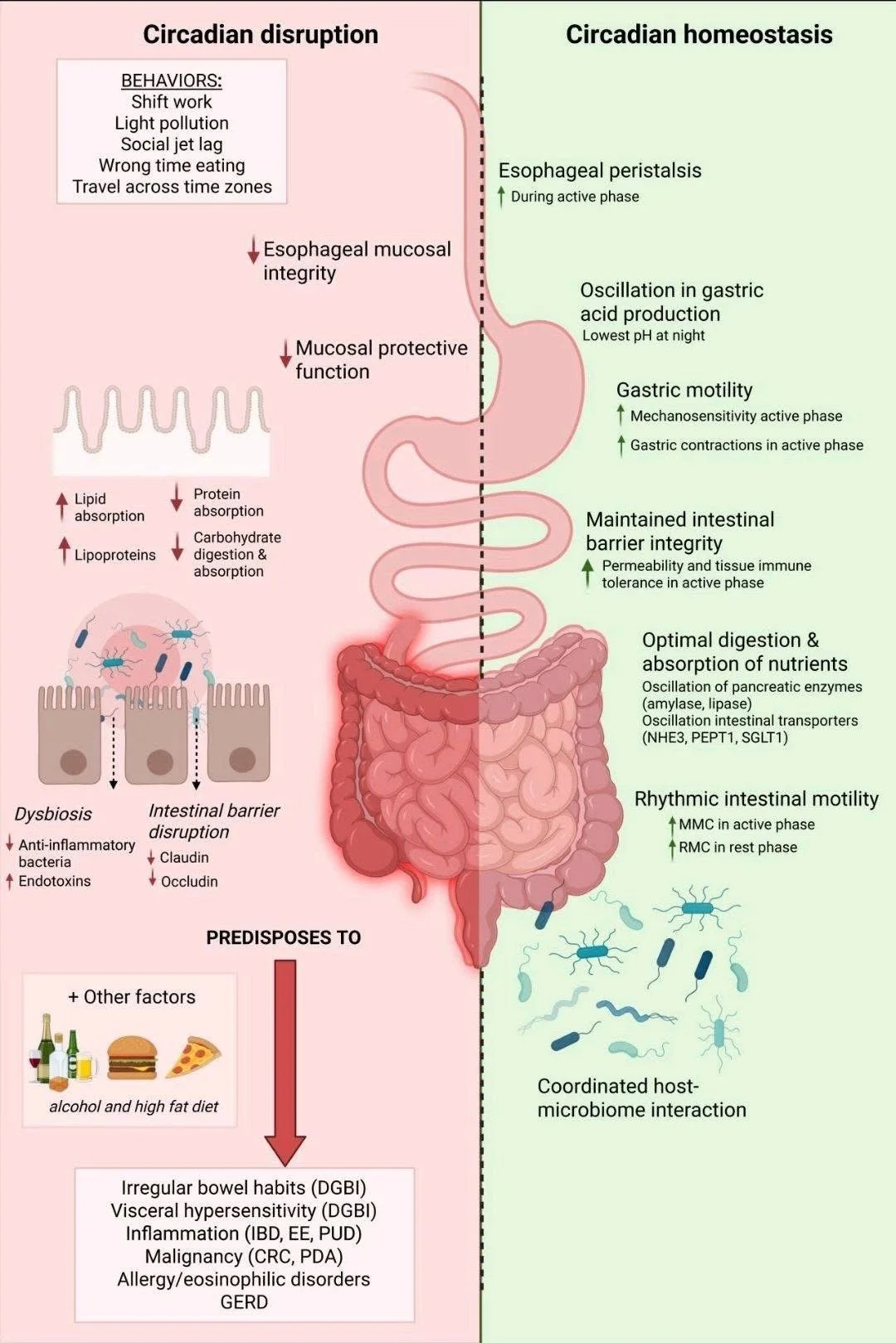
Circadian misalignment — caused by irregular sleep schedules, shift work, late-night eating, or chronic sleep deprivation — disrupts communication between your (host) circadian clock and your population of species in your gut microbiome.
When your circadian signals as misaligned, your GI tract doesn’t just get upset, it can shift into a different operating mode.
Barrier weakens as protective proteins drop, permeability rises and the gut becomes more reactive.
Digestion derails, transporters, enzymes and gastric acid loose their normal rhythm. Carbs, proteins and fats don’t digest properly.
Reduced microbial diversity and quality as microbes flip their behaviour, anti inflammatory species rise, endotoxins rise.
Motility goes off cycle with constipation, irregularity or gut /visceral hypersensitivity.
Altered production of the healthiest microbial metabolites (such as anti inflammatory short-chain fatty acids).
Altered immune and metabolic signals.
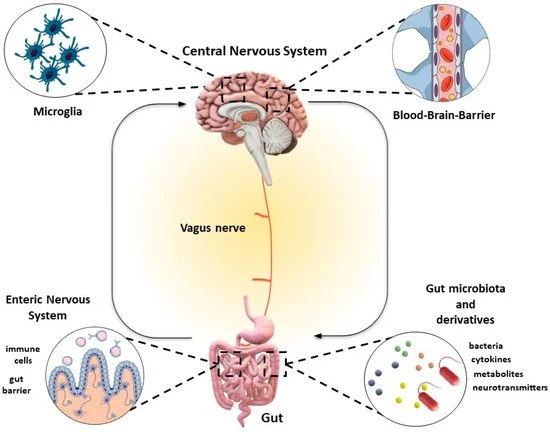
IMPORTANTLY this relationship is bidirectional
Your microbiome feeds signals back to it's host, influencing your gene expressions and your stress hormone rhythms.
Sleep hygiene plays a critical regulatory role in maintaining synchrony between central and peripheral clocks.
Consistent sleep–wake timing reinforces circadian signalling not only in the brain but also in your gut.
From a microbiome perspective, adequate and regular sleep supports:
Stable microbial night / day oscillations
Predictable digestive and immune activity
Appropriate Cortisol and Melatonin rhythms
Calmer bowel actions and easing of gut based discomforts
Conversely, this new science suggests that irregular or insufficient sleep can blunt microbial rhythmicity, contributing to metabolic and inflammatory problems.
Sleep quality and timing should therefore be viewed as foundational inputs into gut health, not secondary lifestyle factors.
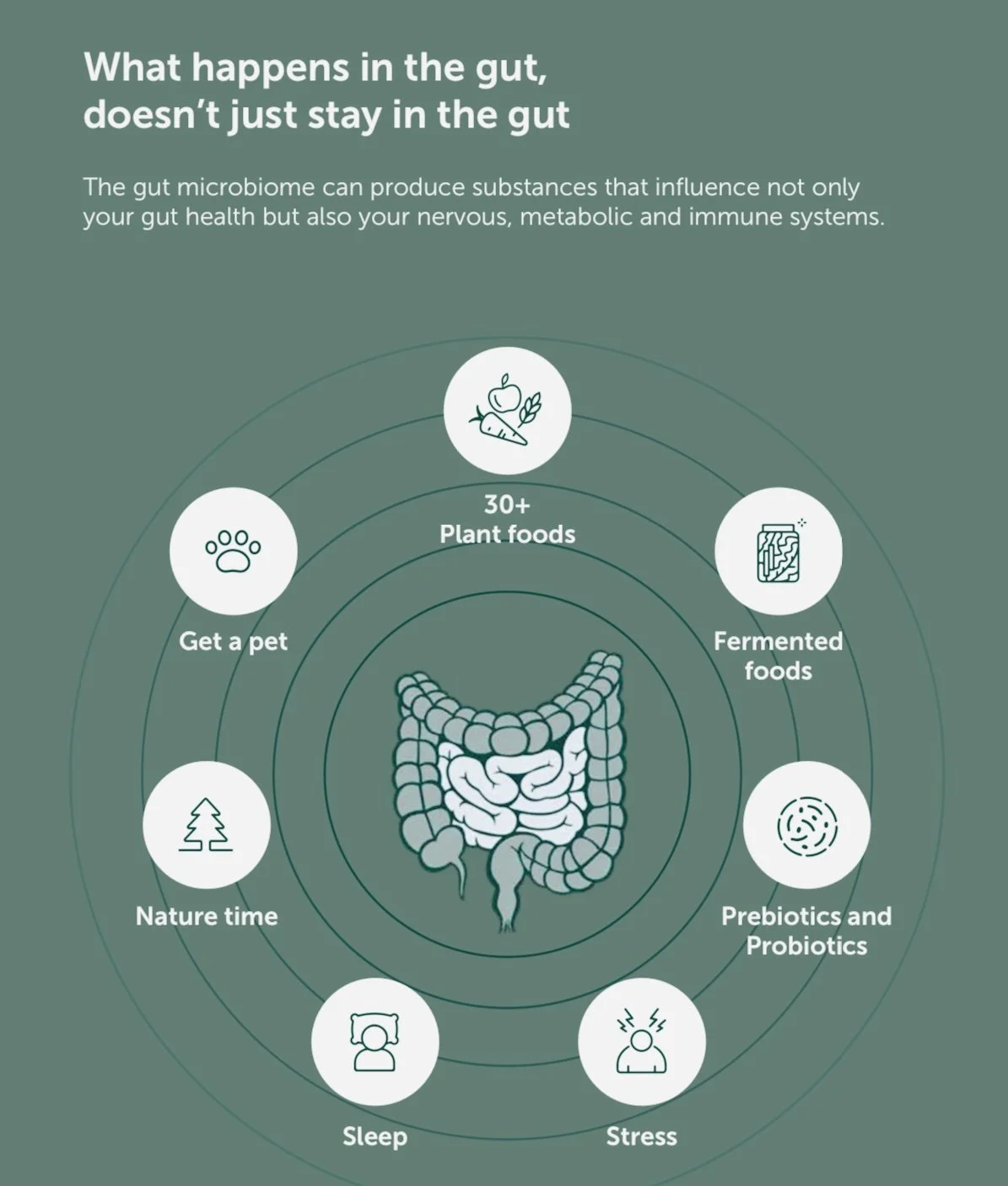
Healthy habits act as powerful circadian cues for your gut microbiome.
Key synchronising factors include:
Consistent meal timing
Defined overnight fasting periods
Morning light exposure as a regular habit
Predictable physical activity patterns
Regular and predictable sleep hygiene
Feeding–fasting rhythms are particularly influential in shaping microbial oscillations.
Irregular eating schedules can desynchronise gut microbial clocks even when total food intake remains unchanged. Regularity helps reinforce coordinated signalling between the gut, liver, immune system, and brain.

Microbiome Testing Is Clinically Relevant
As our understanding of the circadian–microbiome axis evolves, microbiome assessment offers valuable clinical insight.
Testing can help identify:
Reduced microbial diversity and richness
Over- or under-representation of key functional groups and supportive species
Patterns suggestive of circadian disruption or metabolic stress
Pathogens
Gut wall integrity and overall digestive health.
Microba labs offer comprehensive matagenomic sequencing to provide detailed interpretation of your gut function beyond just identifying species present.
When interpreted in the context of the total you, your sleep patterns, stress, physiology, and lifestyle rhythms, microbiome testing allows for more targeted and personalised interventions.
This forms part of my integrated, systems-based plan Functional Health Plan that we build together.


If you want better digestion, mood immunity and metabolic health, you dont just fix what you eat, you fix
WHEN YOU LIVE
Microbiome testing guides us to restore your circadian and microbial balance.

References
Bidirectional Interactions Between Circadian Rhythms and the Gut Microbiome. Applied Microbiology and Biotechnology.
Zheng et al. The Molecular Interplay Between the Gut Microbiome and Circadian Rhythms. Frontiers in Microbiology.
Gut Microbiota Regulates Stress Responsivity via the Circadian System. Cell Metabolism.
Linking Gut Microbiota Rhythmicity to Circadian Maturation. C Muhlematter et al Sci.Rep 2025.