
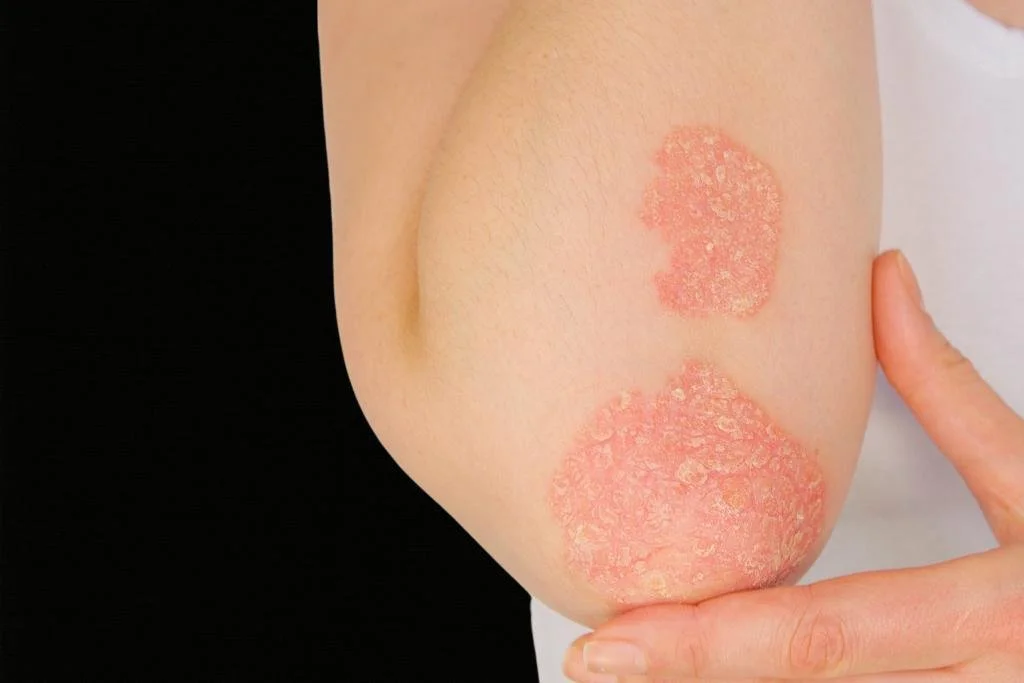
while psoriasis may appear on your skin your health story is likely much bigger than what we can see.
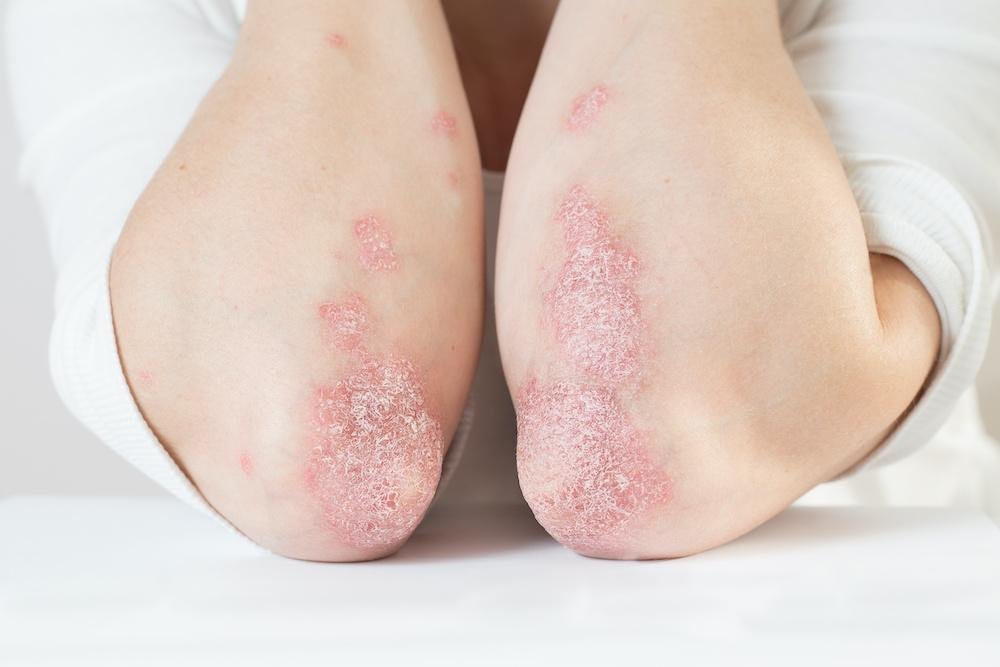
I have supported many patients with Psoraisis over my years. It is not uncommon, affects men and women equally and presentations account for approximately 2-3% of the Australian population.
The science suggests a strong hereditary story but that is not the whole story. Data informs that if one parent suffers with Psoraisis you have a 10-20% increased risk and if both suffer, a 40-60% increased risk.
If you or a loved one lives with psoriasis, you know how frustrating and upsetting it can be. The itching redness, flaking and discomfort are difficult enough, but perhaps even more exhausting is the unpredictability.
Your skin settles, you begin to feel hopeful, and then another flare appears sometimes more angry.
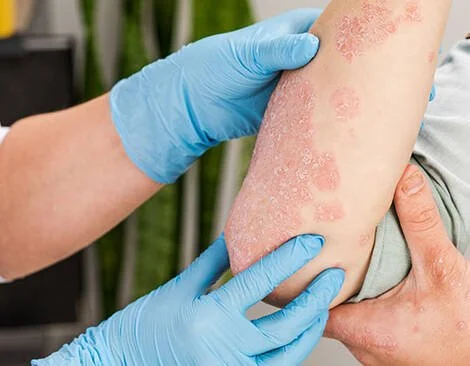
I grew up with my Grandma Jean smothered in creams because of her psoriasis. She found occasional benefit swimming in sea water but it never really cleared. I do note on reflection she was a long term heavy smoker which is now a known risk factor.
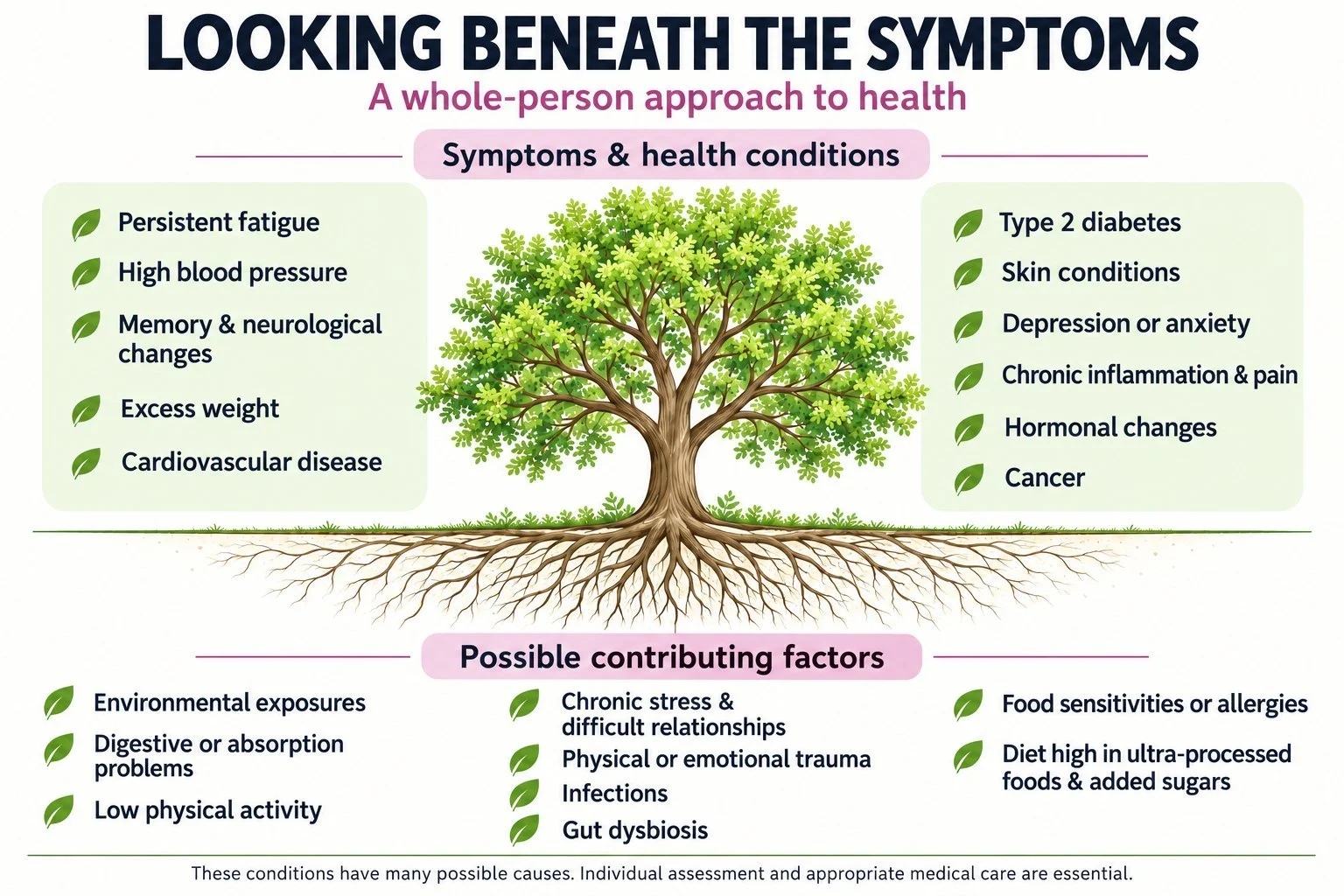
When we consider skin conditions like Psoraisis there are many components at play . I like to consider a messaging alert of inflammation occurring elsewhere in the body, manifesting in the skin.
Psoriasis is a chronic immune-mediated inflammatory condition involving a complex relationship between your Genetics Immune system Metabolism and environmental triggers.
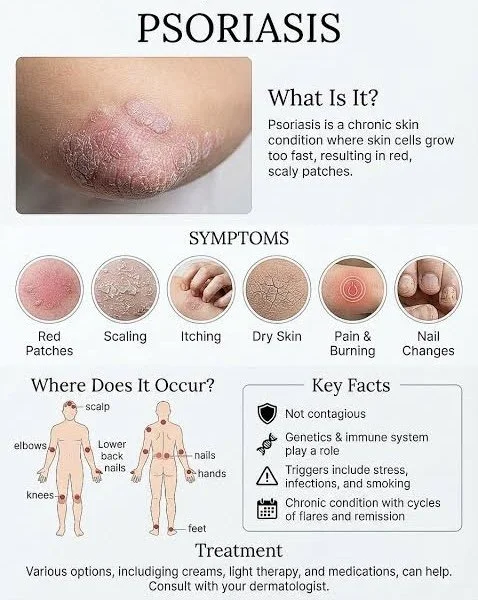
Why does psoriasis develop ?
We know that several immune pathways become overactive particularly those involving inflammatory cytokine messengers called IL-17 and IL-23
This signalling accelerates the production of skin cells causing the familiar thickened, inflamed and scaly patches.
Genetics influence susceptibility, but genes alone do not explain why psoriasis develops or why symptoms fluctuate.
Stress, infections, skin injury, smoking, certain medications , environmental toxin sensitivity and your overall metabolic health can all influence your inflammatory response.
This helps explain why two people with Psoriasis may have very different experiences and triggers.
Typical models of Medical care include topical corticosteroids, anti inflammatory creams, Vitamin D, UVB phototherapy and for significant cases the use of Systemic immunomodulating and biological drugs.
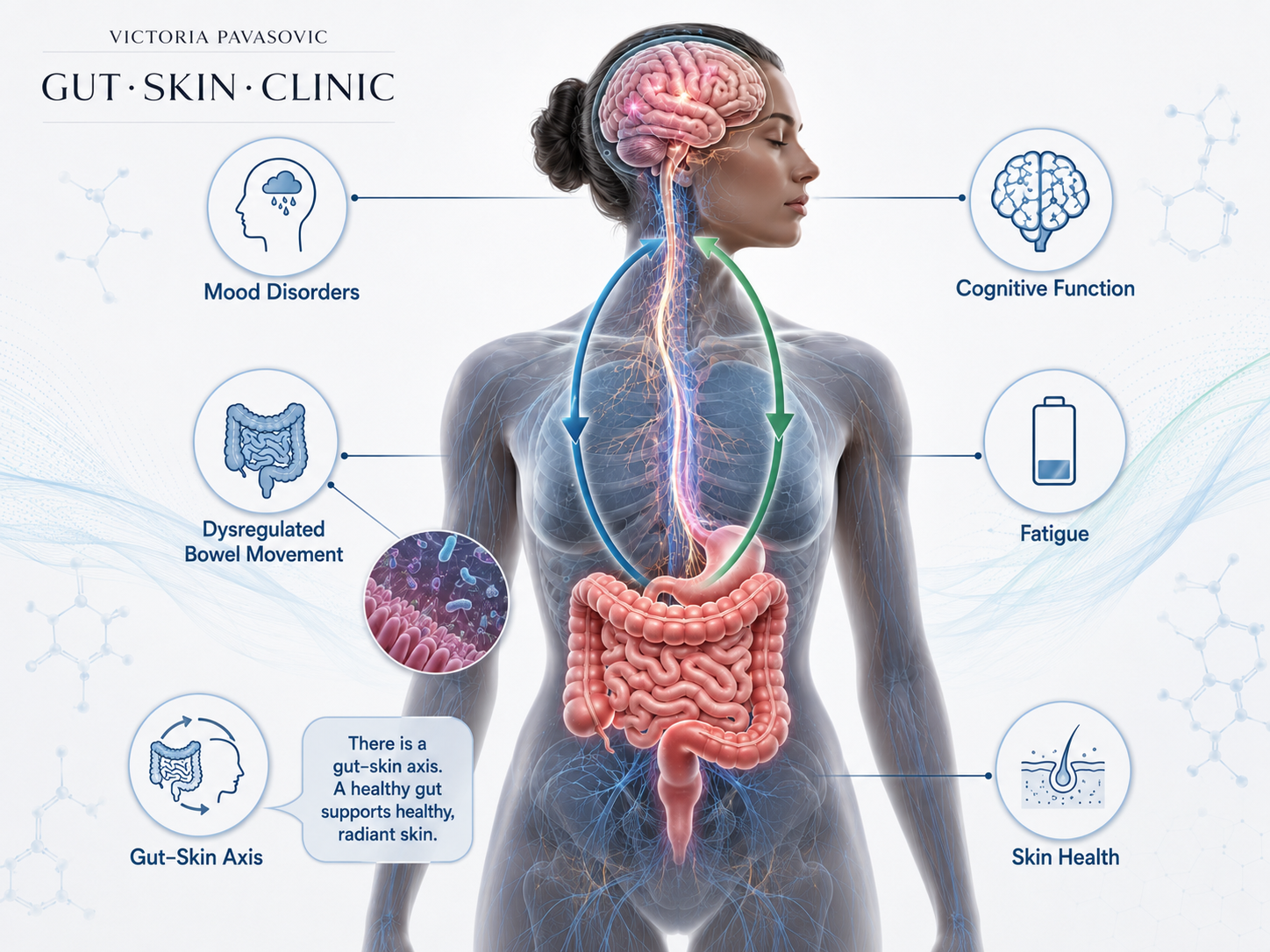
The Gut–Skin connection is an exciting area of research
For my regular followers they would have heard from me many times that your gut is home to trillions of microorganisms that do far more than help digest food.
They fulfil many roles:
communicate with your immune system
influence inflammatory responses
produce beneficial compounds
produce unhealthy endotoxins
produce metabolically active peptides like GLP-1
produce calming neurotransmitters
help maintain overall intestinal health.
One particularly important group of compounds is called short-chain fatty acids, including butyrate. These are produced when certain of your gut bacteria ferment dietary fibres and help regulate intestinal barrier function inflammation and immune activity.
Research published in 2025, including a systematic review by Gao and colleagues identified differences in gut microbial communities between people with Psoriasis and those without.
Some studies have also reported reduced activity of beneficial short-chain fatty acid-producing bacteria including Bifidobacterium species.
This is important because the immune pathways influenced by the gut microbiome overlap with those involved in Psoriasis.
We must be cautious not to confuse an association with a proven cause. We cannot yet say that an unhealthy gut microbiome causes psoriasis or that correcting microbial imbalances will necessarily resolve it.
What the research does suggest is that the gut–skin–immune connection deserves a clinical investigation and an inclusion in treatment planning.
What about Weight Insulin resistance and inflammation…. your metabolic health ?
Science now demonstrates that Psoriasis is associated with an increased likelihood of Insulin resistance, Metabolic syndrome and Cardiovascular disease…..
What we do know is that excess visceral fat can produce inflammatory substances that contribute to your whole body's inflammatory burden.
This means that understanding blood glucose regulation, body composition, nutritional patterns and cardiovascular risk may be relevant when developing a comprehensive Psoriasis care plan.
Importantly, Psoriasis can occur in people of any body size and weight is never the whole explanation.
Can Nutrition and lifestyle make a difference?
Although there is no single Psoriasis diet, I like you to consider a whole body Anti inflammatory reset.
I encourage my patients to consider:
A diverse, Mediterranean-style eating pattern rich in colourful vegetables, legumes, whole grains, nuts and extra virgin olive oil, but sometimes we need to take this dietary shift slowly.
Regular intake of omega-3-rich foods, particularly oily fish.
Testing your Omega 3 levels to ensure you have healthy levels for whole body health. I pick up so many low levels when investigating.
Adequate dietary fibre to support beneficial microbial activity and short-chain fatty acid production again, starting low and slow in most cases.
Identifying individual triggers, including a variety of stresses, smoking and excessive alcohol consumption, environmental toxin sensitivities.
Prioritising restorative sleep, regular movement and healthy metabolic function.
Please consider also that Psoriasis may affect your joints.
Persistent joint pain, swelling or morning stiffness should always prompt medical assessment.
Looking beyond the skin at Gut Skin Clinic
At Gut Skin Clinic in Neutral Bay, Sydney, my approach to inflammatory skin conditions begins with understanding the person not simply treating the rash.
Your Microbiome forms an intersection between your Immune System, your Nervous System and your Hormonal system and is a highly informed place to start
Drawing on more than 4 decades of clinical experience and certification in Functional and Nutritional medicine I work to understand how your nutritional, digestive health, metabolic balance, lifestyle factors and immune system activation contribute to your overall health.
We will reveiw pathology, previous investigations, food patterns, self care and use microbiome assessment to inform clinical judgement and help guide our treatment planning, collaboratively.
A large part of our journey involves unique education suitable to your personal clinical presentation.
My role may be to work collaboratively with your GP or dermatologist, supporting any broader health factors that may be relevant to your condition.
Because while psoriasis may appear on your skin your health story is likely much bigger than what we can see.
Health Education Disclaimer
This article is provided for general health education and information only. It does not constitute individual medical advice, diagnosis or a clinical consultation. For personalised assessment and guidance relevant to your health needs, you are welcome to book a consultation at Gut Skin Clinic.
Victoria Pavasovic CFNMP RN MACN | Gut Skin Clinic
Research and references
Armstrong AW, et al. (2025). Psoriasis. Nature Reviews Disease Primers, 11, 45. Read publication.
Gao Y, et al. (2025). Characterization of the Gut Microbiota in Patients with Psoriasis: A Systematic Review.Pathogens, 14(4), 358. Read research.
Xue M, et al. (2025). Alterations of gut microbiota for the onset and treatment of psoriasis: A systematic review. European Journal of Pharmacology, 998, 177521. Read research.
Gut microbiota–host immunity crosstalk in psoriasis: from dysbiosis to cutaneous inflammation. (2026). Review of microbial metabolites, intestinal barrier function and IL-23/IL-17 immune pathways. Read open-access review.
American Academy of Dermatology and National Psoriasis Foundation. Guidelines of care for the management of psoriasis, including associated metabolic and cardiovascular conditions. Clinical guidelines
Victoria Pavasovic CFNMP RN MACN
Certified Functional and Nutritional Medicine Practitioner (RN)
Microba Microbiome Clinical Specialist
International training / Regenerative Aesthetics / Skin and Hair Health
Professional Food and Nutritional Coach
Curated Medically Compounded Skin Care