
Cholesterol testing in 2026: Why ApoB and Lipoprotein(a) matter more than LDL
What You Need to Know About ApoB, Lipoprotein(a) and earlier screening, and why your GUT is important.
An insightful shift towards PRECISION PREVENTION
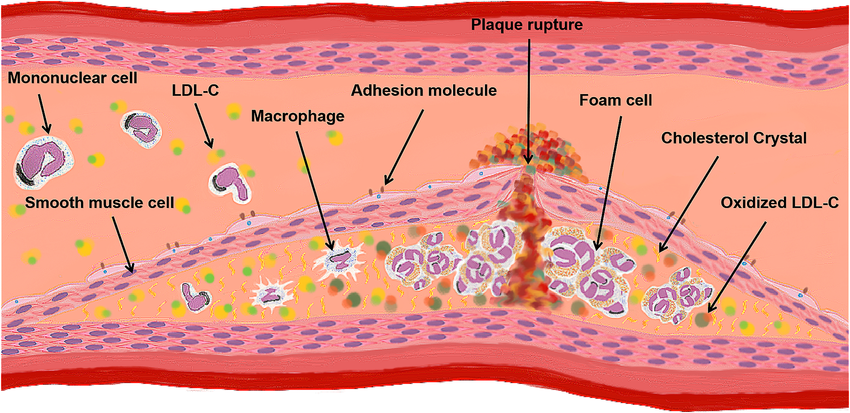
Heart disease remains the leading cause of preventable illness worldwide, yet many people still believe a “normal cholesterol test” means they are safe. The new 2026 American College of Cardiology (ACC) and American Heart Association (AHA) Guidelines are shifting that conversation toward
Earlier detection, deeper risk assessment and prevention before disease develops
Latest Heart Disease Data in Australia (2025–2026)
Despite improvements in treatment and awareness, cardiovascular disease (CVD) remains one of Australia’s biggest health burdens. Importantly it is not just an OLD PERSONS concern as many younger Australians are now implicated.
Recent Australian Institute of Health and Welfare (AIHW) data shows:
Around 45,000 Australians died from Cardiovascular disease in 2022, representing approximately 1 in 4 deaths nationally.
Approximately 120 Australians die every day from Cardiovascular disease — roughly one person every 12 minutes.
More than 1.3 million Australian adults were living with heart, stroke or vascular disease in 2022.
There were around 57,100 acute coronary events (heart attacks or unstable angina) in 2023, equating to about 156 events every day.
Coronary heart disease remains one of the leading contributors to disease burden in Australia in both men and women.
Modern prevention is increasingly focusing on:
earlier detection of risk factors such as elevated ApoB, Lipoprotein(a), Lp(a)
understanding and balancing your gut metabolites with microbiome optimisation
insulin resistance
hypertension
metabolic inflammation
Importantly, while deaths from heart disease have gradually declined over decades due to better prevention and treatment, cardiometabolic disease remains deeply connected to inflammation, obesity, diabetes, vascular ageing, gut health and lifestyle-related chronic disease.
The graphic below elegantly summarises key pilars included in our recommended template of care
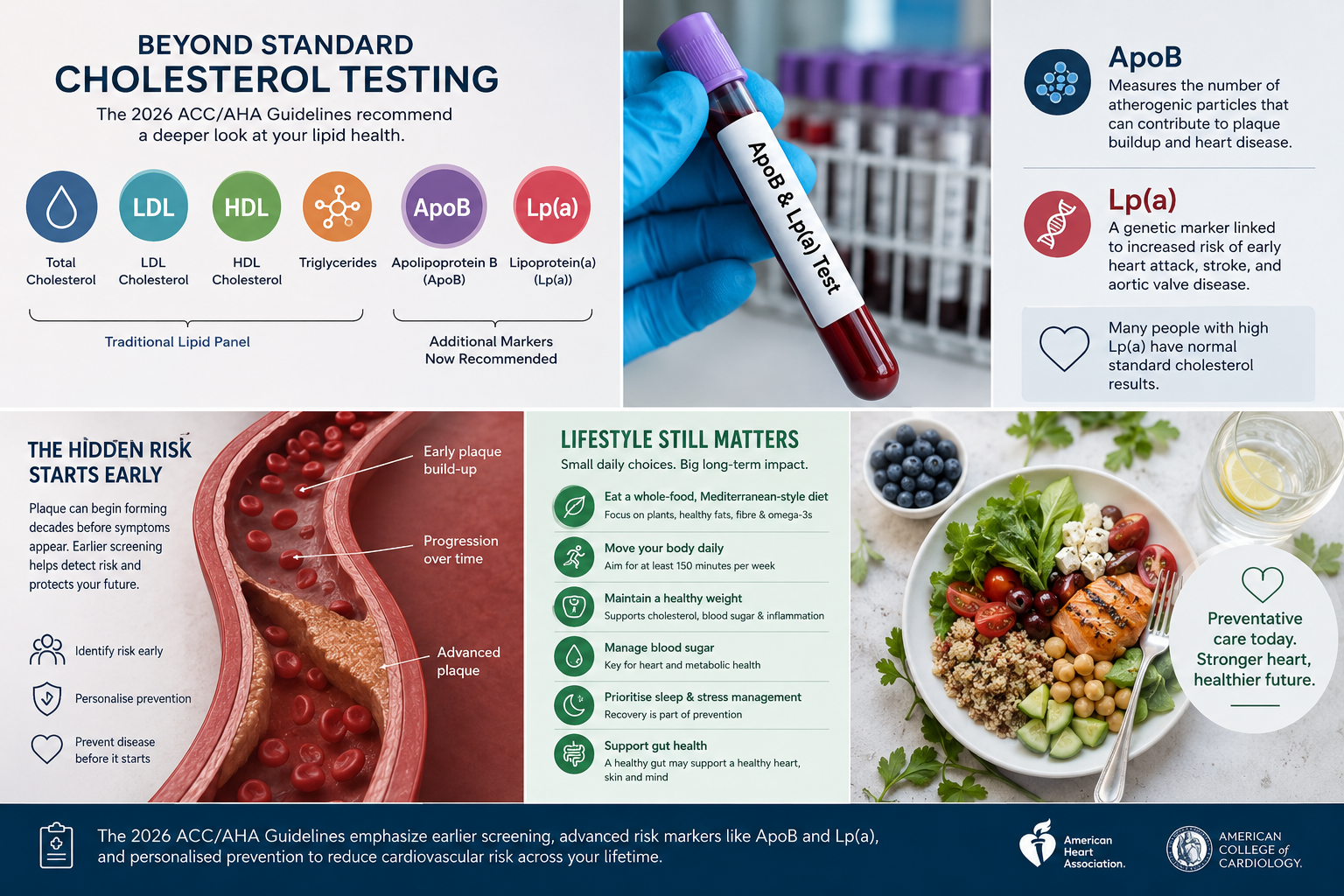
At the Gut Skin Clinic we create together precision treatment plans for you, focused on preventative health, longevity and gut and skin health - this reflects the broader movement in modern medicine:
Identifying and managing silent inflammation and cardiovascular risk years before symptoms appear.
Beyond Standard Cholesterol Testing
Traditional cholesterol panels usually measure:
Total cholesterol
LDL (“bad”) cholesterol
HDL (“good”) cholesterol
Triglycerides
While still important, the new guidelines place increased emphasis on the following two measures.
Apolipoprotein B (ApoB)
ApoB measures the number of atherogenic particles capable of entering artery walls and contributing to plaque formation. Research shows ApoB may predict cardiovascular risk more accurately than LDL cholesterol alone, particularly in people with:
Insulin resistance
Metabolic syndrome
Elevated triglycerides
Obesity
In simple terms, LDL cholesterol tells us how much cholesterol is being carried, while ApoB tells us how many potentially harmful particles are circulating. More particles often means greater long-term cardiovascular risk.
Lipoprotein(a) or Lp(a)
Lipoprotein(a), often written as Lp(a), is a genetically inherited cholesterol particle associated with increased risk of:
Early heart attack
Stroke
Aortic valve disease
Premature cardiovascular disease even in otherwise healthy individuals
Importantly, many people with elevated Lp(a) have normal standard cholesterol results.
This is why the 2026 guideline strongly supports broader screening. I recommend that my patients have Lp(a) measured at least once in their lifetime, particularly if there is:
A family history of early heart disease
High cholesterol resistant to treatment
Strong family history of stroke
Because Lp(a) is largely genetic, lifestyle alone may not significantly lower it — but identifying it early allows for more aggressive preventative care and risk reduction.
Why Earlier Screening Matters…this is not simply an old persons issue.
The new guidelines increasingly support cholesterol assessment earlier in life, including childhood and young adulthood in selected patients. This is because artery plaque formation can begin silently decades before symptoms appear.
Earlier screening allows clinicians to identify:
Familial hypercholesterolaemia
Genetic lipid disorders
Insulin resistance
Inflammatory metabolic risk
Elevated ApoB or Lp(a)
This preventative approach aligns closely with the philosophy of modern longevity medicine: detect risk early, intervene early, and reduce cumulative lifetime inflammation and vascular risk.
Although advanced testing is important, the foundation of cardiovascular prevention remains lifestyle medicine. The guidelines continue to strongly emphasise:
Mediterranean-style nutrition
High-fibre whole foods, however know which fibre best suits your biome
Physical activity
Weight optimisation
Smoking cessation
Blood sugar control
Sleep and stress management is hugely important.
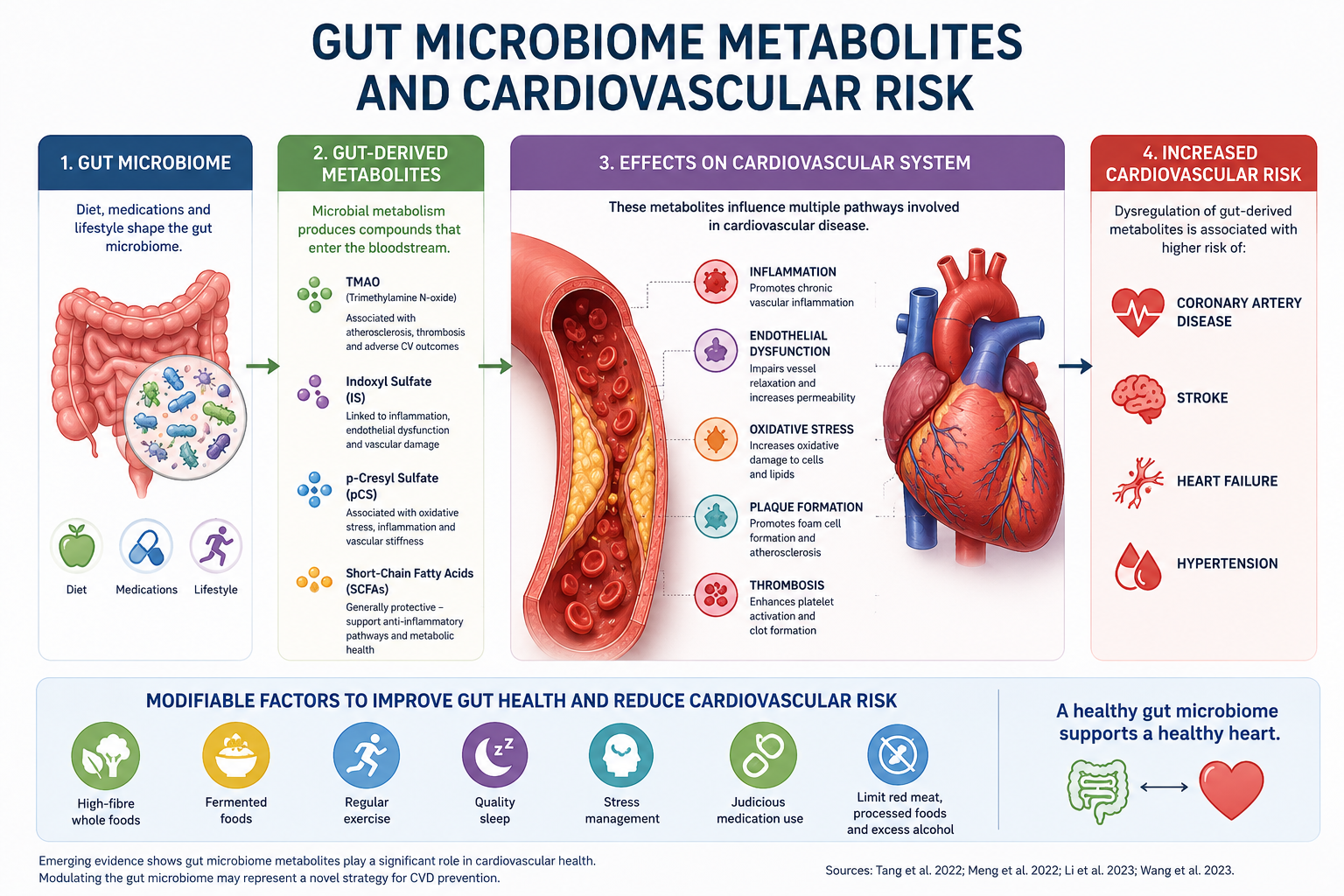
Emerging evidence shows gut microbiome metabolites (waste products of your bacterial species) play a significant role in Heart and Vascular health. We now know that a gut microbiome out of balance (dysbiosis) may influence inflammation, cholesterol metabolism and cardiometabolic disease.
The Future of Preventative Care
The 2026 ACC/AHA Guidelines reflects a major shift toward precision prevention.
Instead of waiting for cardiovascular disease to develop, I recommend using tools such as ApoB and Lp(a) to identify cardiovascular risk earlier and personalise preventative care more effectively.
For patients interested in proactive ageing, cardiovascular health, skin health, longevity and preventative wellness, understanding these newer markers can provide valuable insights into long-term health beyond a standard cholesterol test.

Resources
2026 ACC/AHA Guideline on the Management of Dyslipidemia
American Heart Association — Dyslipidemia and cardiovascular prevention resources.
American College of Cardiology — Preventative cardiology and lipid management guidance.
Snidermann AD, et al. Apolipoprotein B Particles and Cardiovascular Disease Risk. Journal of the American College of Cardiology.
Tsimikas S. A Test in Context: Lipoprotein(a). Journal of the American College of Cardiology.
Victoria Pavasovic CFNMP RN MACN
Certified Functional and Nutritional Medicine Practitioner.
Microba Microbiome Practitioner
Skin Health + Hair Restoration
Compounded Skin Nutraceuticals
Professional Food and Nutritional Coach